
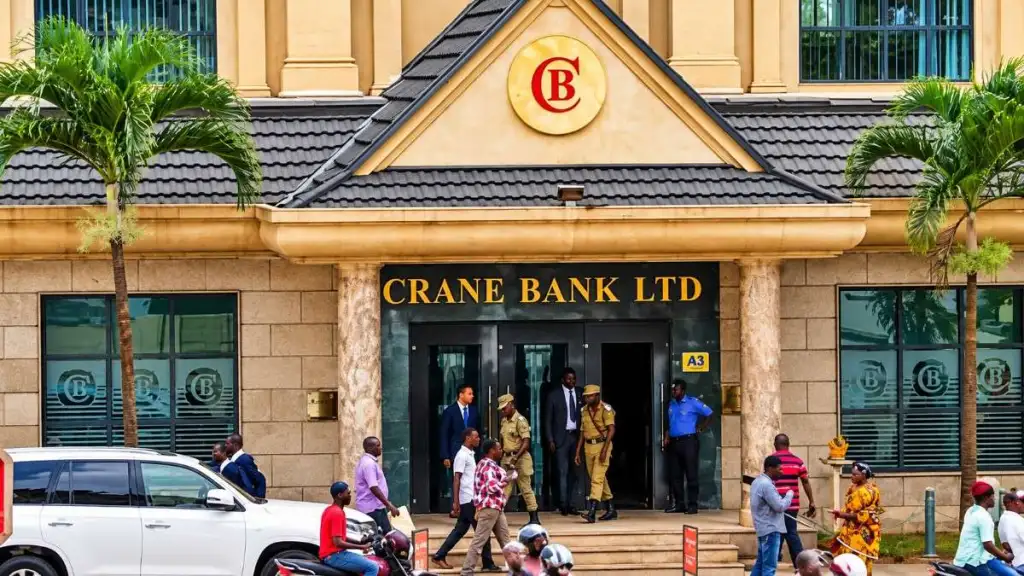
Nearly a decade after Crane Bank was taken over by the Bank of Uganda, the circumstances surrounding its closure and subsequent transfer to dfcu Bank are once again under intense scrutiny, with developments unfolding simultaneously in the United Kingdom and Uganda.
The dispute involving businessman Dr Sudhir Ruparelia and other former shareholders has evolved into two major legal and institutional battles. In London, the former owners are pursuing a damages claim of at least €200 million, while in Kampala, the central bank is seeking recovery of more than Shs219 billion in liquidity support it says remains outstanding.
The London proceedings have brought international financial institutions connected to the Crane Bank transaction into the spotlight, including Rabo Partnerships, a subsidiary of Dutch banking group Rabobank, and Norway’s Norfinance AS. Both were associated with foreign investment interests behind dfcu Bank when it acquired Crane Bank’s business in January 2017.
The substantive hearing began at London’s Commercial Court on October 5, 2026, with the proceedings expected to continue for between 12 and 16 weeks. The case is examining the events surrounding the transfer of Crane Bank’s business and the treatment of its assets during the transaction.
Among the claimants are Crane Bank, Sudhir Ruparelia, members of his family, including Jyotsna, Meera and Sheena Ruparelia, the estate of the late Rajiv Ruparelia, and former shareholder Tom Mugenga.
Their position is that Crane Bank’s assets were transferred without an adequate independent valuation, a process they contend disadvantaged the former owners. They are also challenging aspects of the financial arrangements surrounding the transaction.
One issue attracting particular attention concerns $27.5 million, approximately Shs99 billion, reportedly raised through the sale of a portfolio of Crane Bank loans in late 2016. The claimants have questioned how the proceeds were intended to be handled and have raised allegations of possible impropriety in the arrangements.
The defendants have rejected the allegations. dfcu maintains that Crane Bank was significantly undercapitalised and that the intervention by the central bank was necessary to protect depositors and preserve financial stability. It also relies on valuation work involving KPMG and argues that the funds in question were intended to meet urgent financial obligations.
Norfund, which is linked to Norfinance, has similarly denied the claims.
For Sudhir, who established Crane Bank in 1995 and developed it into a major locally owned financial institution, the London case provides an opportunity for the disputed transaction to be examined through formal court proceedings. However, the court has yet to determine liability or whether the claimants are entitled to the compensation being sought.
While the London case focuses on the transaction and the conduct of the parties involved, Uganda’s parliamentary inquiry is examining a separate but closely connected question: the recovery of funds advanced by the central bank.
On November 10, 2026, Bank of Uganda Governor Michael Atingi-Ego appeared before Parliament’s Committee on Commissions, Statutory Authorities and State Enterprises (COSASE), chaired by Kyadondo East MP Muwada Nkunyingi.
During his appearance, the governor told legislators that Shs219.459 billion, recorded in the central bank’s accounts as unrecovered liquidity support, remained payable by Crane Bank and its former shareholders.
Sudhir has disputed the central bank’s position, arguing in a written submission to the committee that the former shareholders should not be held personally responsible for funds advanced after they had lost control of the institution.
He maintains that the Bank of Uganda suspended Crane Bank’s board and appointed a statutory manager on October 20, 2016, effectively removing the former owners from the bank’s management.
According to his submission, the central bank had not spent any money on Crane Bank’s affairs at the point when the takeover occurred. He further argues that the former shareholders had no involvement in the subsequent management of the institution or the transaction through which its business was transferred to dfcu.
His legal argument also rests on the principle of limited liability, under which shareholders are generally separate from the financial obligations of the companies they own.
He contends that any outstanding amount attributable to Crane Bank should therefore be treated as a liability of the bank itself rather than automatically imposed on its former shareholders.
Sudhir is expected to appear before COSASE in person during the first week of December 2026, following the conclusion of his scheduled travels in late November.
The parliamentary proceedings have also raised concerns about how much information surrounding the Crane Bank intervention can be discussed publicly while related litigation is taking place abroad.
Governor Atingi-Ego cautioned legislators that detailed disclosure of certain matters concerning the central bank’s handling of Crane Bank could potentially affect the London proceedings. Although the Bank of Uganda is not a party to that case, he asked the committee to consider postponing sensitive questioning or handling particular matters in a closed session.
The two proceedings now place the Crane Bank transaction under scrutiny from different directions. London’s Commercial Court is dealing with claims surrounding the acquisition process and alleged losses suffered by the former shareholders, while COSASE is examining the central bank’s position on the recovery of public funds.
Ultimately, the outcome of the London litigation and the findings of the parliamentary inquiry could have significant financial and institutional implications. For Uganda’s banking sector, the case also presents an important examination of bank resolution procedures, shareholder accountability and the protection of depositors when financial institutions encounter serious difficulties.
For now, the central questions remain unresolved, with the parties maintaining sharply different positions on the events that led to Crane Bank’s takeover and the subsequent transfer of its business.

