
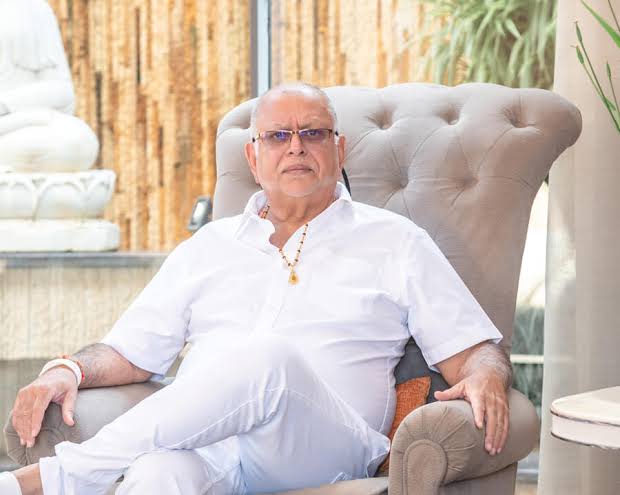
Recent market updates ranking Sudhir Ruparelia among the leading individual investors on the Uganda Securities Exchange have once again sparked discussion about the scale and thinking behind his expanding financial influence. Already well known for major interests in real estate, hospitality, education, and insurance, the new figures reinforce a pattern that has defined his journey in business: when others pause to protect what they have, he focuses on expanding and strengthening his assets.
From busy city arcades to luxury residences and high-end office spaces, Ruparelia has earned the nickname Kampala’s Premier Landlord. Yet behind that title lies a quieter philosophy centered on patience and long-term value rather than flashy deals.
Build, Hold, and Rarely Sell
Unlike many modern billionaires who chase fast valuations and quick exits, Ruparelia’s strategy revolves around creating lasting assets. For more than three decades, he has purchased strategic land, developed it into major properties, and held onto those investments over the long term.
Landmarks such as Crane Chambers, Speke Resort Munyonyo, Pearl Business Park, Kingdom Kampala, Kabira Country Club, and Speke Apartments were never intended for quick resale. Instead, they form a network of income-generating assets designed to produce stable returns year after year.
In Ugandan business circles, a belief often linked to Ruparelia captures his thinking: in an unpredictable environment, land remains one of the most reliable stores of value. With economic conditions and regulations constantly shifting, physical assets in prime locations provide both stability and consistent revenue.
Owning the City’s Key Addresses
A walk through Kampala makes his influence easy to notice. Many of the capital’s most valuable commercial and residential spaces are connected to his portfolio. Diplomatic missions rent from his residential properties. Corporations operate from his office buildings. Major international gatherings are hosted at his resorts.
By owning properties that support commerce, hospitality, and education, he has effectively created interconnected business ecosystems. Hotels complement conference venues, office towers attract corporate tenants, and educational institutions deliver reliable annual income. The structure resembles vertical integration, but achieved without excessive publicity.
Continuing to Expand
What makes his rising position on the stock market particularly interesting is the timing. At a stage when many wealthy investors focus on preserving their fortunes, Ruparelia appears to be expanding further. Reports highlighting his large equity holdings on the Uganda Securities Exchange suggest he is diversifying beyond property, though still applying the same patient investment style.
Instead of short-term trading, sources close to the market say his method mirrors his property strategy: invest in solid companies, hold the shares, and benefit from steady dividend returns. The approach remains consistent—build wealth slowly but steadily.
Growth After Challenges
Even after facing significant corporate disputes in previous years, some observers expected him to slow down. The opposite seems to have happened. New developments continued, hotels underwent upgrades, education projects expanded, and commercial properties advanced.
Now, with stock market investments increasing as well, the pattern appears clear: earnings are continually reinvested into long-term assets.
A Different Kind of Billionaire
At a time when many entrepreneurs build their reputations through social media and constant publicity, Ruparelia’s style is noticeably different. While his projects frequently appear in headlines and his philanthropy keeps him in the public eye, much of his business expansion happens quietly.
New investments often become visible only after official filings or completed developments. Where startup founders measure success by rapid quarterly growth, his focus has always been measured in decades.
Patience as a Strategy
Industry observers say many of his prime properties were acquired years ago when certain commercial districts were still undervalued. That long-term perspective continues to shape his investment choices today.
As Uganda’s economy evolves with infrastructure growth, rising urban populations, and future oil-sector activity strategic land ownership and strong equity positions could become even more valuable. Ruparelia’s response has remained consistent: secure key opportunities early, develop them carefully, and keep them for the long haul.
Building for the Long Term
Every investment model carries risks, including market fluctuations and regulatory challenges. However, experience suggests resilience in his approach. Prime real estate tends to maintain value over time, and reliable company shares reward patient investors. Rental income also helps soften economic downturns.
In a business environment often driven by hype and short-term success, the empire built by Sudhir Ruparelia reflects a different mindset discipline, patience, and long-term thinking.
From bustling commercial arcades in central Kampala to luxury properties overlooking Lake Victoria, he has constructed more than just buildings. He has created a network of enduring assets.
And as his presence on the stock market grows, one message becomes clearer: while some investors chase trends, he focuses on compounding value. While others exit quickly, he stays invested. And while headlines come and go, his strategy remains firmly anchored in long-term growth.

