


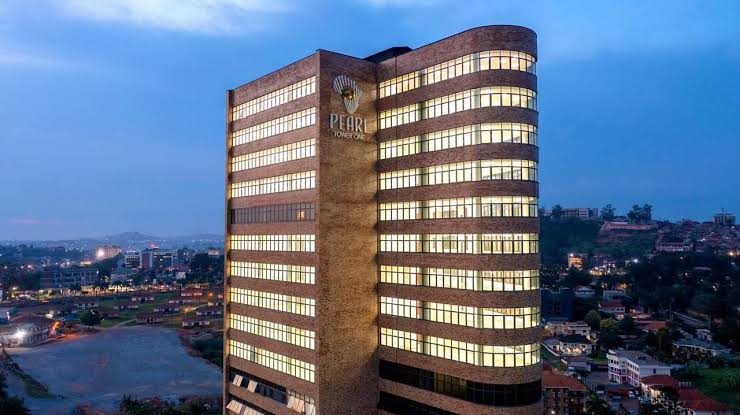
Ugandan businessman Sudhir Ruparelia has established a significant real estate portfolio that continues to influence Kampala’s evolving commercial environment. Through years of investment in strategically located properties, he has developed office and commercial facilities used by a broad range of organisations, including private businesses and government institutions.
Recent figures show that government ministries, departments and agencies collectively spend about Shs3.152 billion every month on office space in properties linked to the Ruparelia business empire. On an annual basis, that translates to roughly Shs37.8 billion, illustrating the scale of the group’s commercial property holdings.
The figures also demonstrate how retaining ownership of prime commercial buildings can provide investors with a steady source of long-term income while simultaneously supplying institutions with the workspace they require.
A major example of Ruparelia’s investment in Kampala’s commercial sector is Kingdom Kampala, a prominent mixed-use development located in the city centre. The complex provides approximately 18,000 square metres of office accommodation alongside about 4,000 square metres of retail space, as well as substantial parking and supporting facilities.
Developments of this nature have contributed to the changing character of Kampala by providing modern premises where companies, government agencies and other organisations can conduct their operations.
Ruparelia’s property strategy has largely focused on long-term ownership rather than developing buildings solely for immediate sale. By retaining prime properties and leasing them to tenants, his businesses are able to generate recurring revenue while maintaining a presence in Uganda’s commercial real estate market.
The continued occupation of these properties by government institutions also reflects the demand for well-located, professionally managed office accommodation in the capital.
Government agencies have been among the tenants of properties associated with Ruparelia’s businesses for several years. Parliament, for instance, previously entered into a Shs4.5 billion rental agreement with Meera Investments, a company associated with the Ruparelia Group, for additional accommodation for MPs and parliamentary staff.
The arrangement followed the required procurement procedures and illustrated how private property developers can help provide accommodation for public institutions.
For government agencies, renting privately owned office facilities can offer an alternative to immediately investing large amounts of public money in new construction. Private developers finance the development and maintenance of the buildings, while government institutions pay for the space they occupy.
This arrangement allows public institutions to access existing facilities while giving property owners an opportunity to earn returns from their investments.
Ruparelia’s property activities are also part of a wider entrepreneurial journey that has seen him build businesses across several sectors, including hospitality, education and real estate.
His investments have contributed to employment and supported activity across the construction, property management, retail and professional services industries.
As Kampala continues to grow, demand for modern and strategically located office accommodation is expected to remain an important feature of the property market. Developers with established portfolios are therefore likely to continue playing a significant role in determining how the city’s commercial districts evolve.
For Ruparelia, the billions generated through office rentals reflect a business model built around long-term ownership, strategic investment and the ability to generate recurring income from valuable commercial assets.
His property journey demonstrates how indigenous Ugandan investors can build substantial wealth by developing and retaining income-generating assets while contributing to the expansion of the country’s commercial infrastructure.
As Kampala’s skyline and business environment continue to change, the Ruparelia Group’s extensive property portfolio remains a prominent example of how private investment is helping reshape the capital’s commercial landscape.