


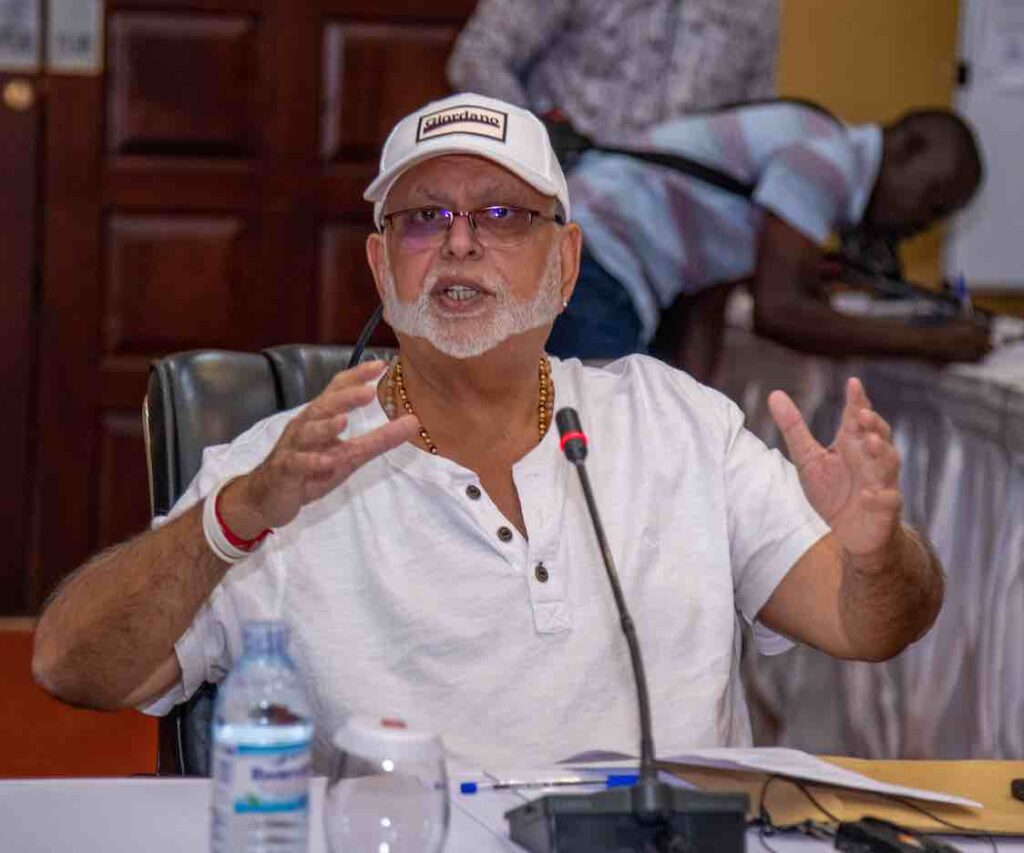
Kampala’s commercial skyline continues to evolve as major property developments reshape the city’s business landscape. Among the latest projects drawing attention is the second phase of Kingdom Kampala, a 21-storey mixed-use development by businessman Dr Sudhir Ruparelia, featuring a rooftop helipad.
The project represents another step in the Ruparelia Group’s expansion into premium commercial real estate, with an emphasis on developments designed to attract established businesses, international investors and high-value corporate tenants.
The helipad is among the tower’s distinctive features, offering an additional level of convenience for executives, diplomats, financiers and other business travellers who require efficient access to commercial facilities.
Kingdom Kampala Phase Two builds on the success of the first development, completed in 2019. Phase One transformed an underutilised property in the central business district into a major commercial destination, attracting businesses and increasing activity in the surrounding area.
The latest development also follows the completion of Pearl Tower One, a 19-storey building at Pearl Business Park. Together, the projects reflect the group’s growing interest in modern, mixed-use properties that combine commercial facilities with infrastructure suited to demanding corporate tenants.
A Business Model Built on Financial Discipline
One of the distinguishing features of the Ruparelia Group’s property strategy has been its reported preference for financing developments through internal resources rather than relying heavily on external borrowing.
While some property developers turn to bank loans and other forms of debt to accelerate construction, the group has generally pursued an approach that links expansion to available resources and long-term financial planning.
This strategy allows projects to be developed with greater consideration for their financial sustainability, particularly in an industry where high construction costs, changing regulations and unpredictable market conditions can put pressure on investors.
Dr Ruparelia, who chairs the group, has consistently advocated cautious financial management and warned businesses against excessive borrowing. His investment philosophy centres on building sustainable enterprises rather than pursuing rapid expansion at the expense of financial stability.
The group’s property interests now span a wide range of developments, including office buildings, hotels, shopping centres, schools, banking facilities and resorts. Its portfolio is estimated to comprise more than 300 commercial properties, making it one of the most extensive privately held property portfolios in Uganda.
Expanding Through Changing Market Conditions
The group’s continued investment in property has taken place against a backdrop of economic uncertainty, infrastructure challenges and changing demand within Uganda’s real estate sector.
Even during periods when some developers have scaled back their activities, the Ruparelia Group has continued to invest selectively, strengthen existing businesses and pursue opportunities in the market.
Its approach has involved acquiring and restructuring assets, reinvesting business returns and focusing on locations with potential for long-term commercial activity.
This has helped establish a presence across several important sectors of Uganda’s economy, including banking, education, hospitality and real estate.
The group’s preference for mixed-use developments also reflects a wider trend in modern urban planning. Such projects bring different activities into one location, combining retail outlets, office accommodation, hospitality services and, in some cases, residential facilities.
For Kampala, developments of this nature can support construction activity, create employment, generate demand for local suppliers and contribute to the city’s commercial infrastructure.
What Kingdom Kampala Phase Two Means for the City
As Kampala continues to grow as a commercial and administrative centre, demand for modern business facilities is expected to remain an important consideration for property investors.
Large developments such as Kingdom Kampala Phase Two form part of the infrastructure needed to accommodate companies, professional services and international organisations seeking suitable premises in the capital.
The inclusion of a rooftop helipad also gives the project a distinctive feature that could appeal to a particular category of corporate and international clientele.
Uganda’s economic growth and its position as a regional business destination provide opportunities for investors willing to commit resources to long-term property developments. However, the success of such projects will ultimately depend on tenant demand, occupancy levels and the ability to maintain competitive facilities.
For Dr Sudhir Ruparelia and the Ruparelia Group, the latest Kingdom Kampala development represents a continuation of an investment strategy built around commercial property, financial discipline and gradual expansion.
As the project adds another landmark to Kampala’s skyline, it also highlights the growing role of large private-sector developments in shaping the city’s future as a regional business destination.