
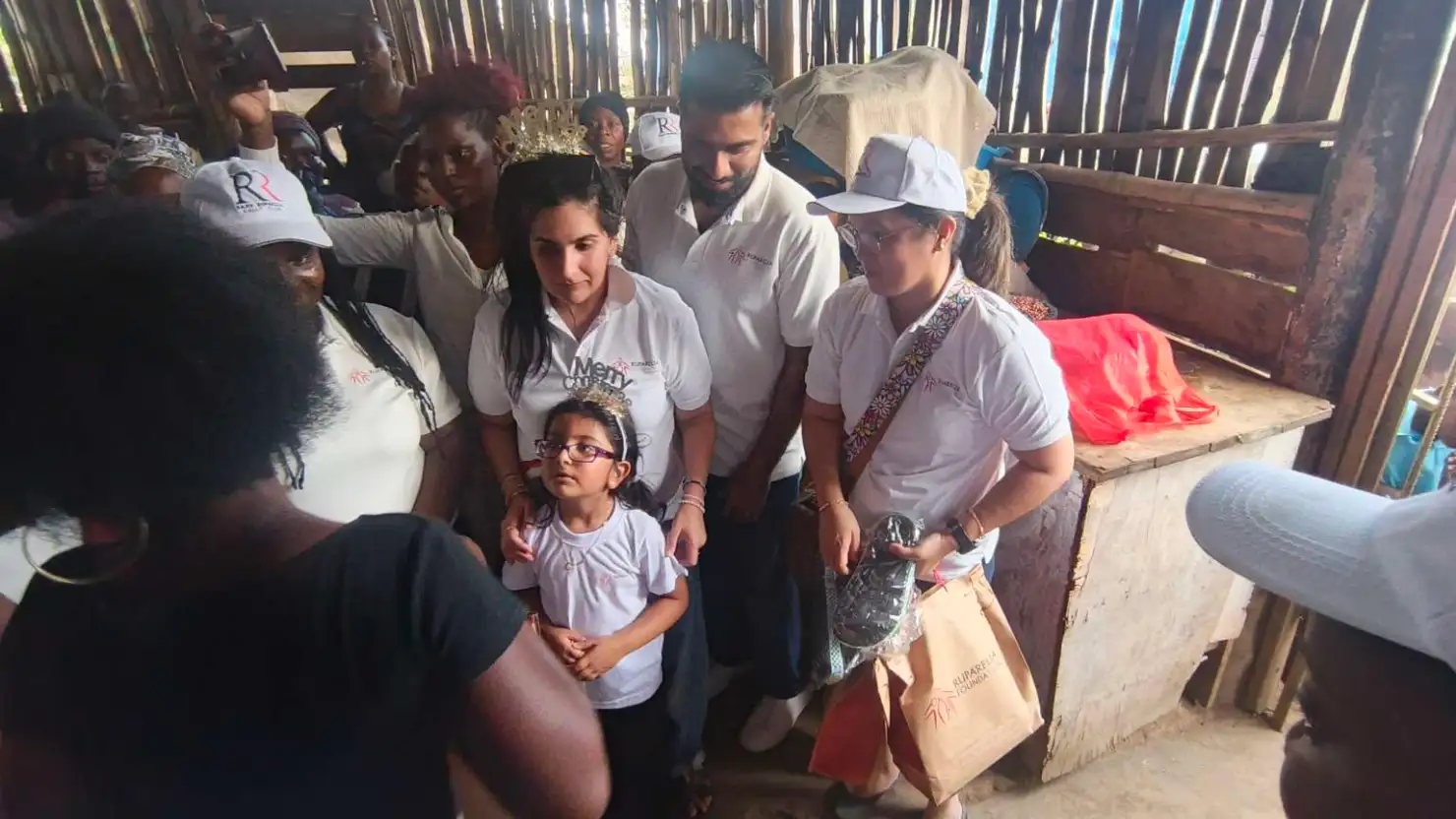
In the tight alleyways of Kamwokya, where everyday survival depends as much on determination as it does on limited resources, the Christmas season this year carried a subdued but powerful message of reflection and fresh beginnings.
Rather than marking the season with ceremony, the Ruparelia family, through the Ruparelia Foundation, chose meaningful action. Their engagement was presented not as a one-time act of generosity, but as a continuation of principles long associated with the late Rajiv Ruparelia.
The initiative placed emphasis beyond festive donations. Central to the effort was a sanitation project aimed at tackling one of Kamwokya’s long-standing struggles poor waste management in overcrowded informal settlements.
Eco-friendly toilets built from plastic bottles collected by residents served a dual purpose. They provided essential sanitation infrastructure while symbolising collective responsibility. For locals, the project represented a rare combination of innovation and community involvement, transforming waste into a useful resource and strengthening a sense of ownership.
At the handover ceremony, Ruparelia Foundation director Sheena Ruparelia explained that the project reflected a long-term vision rather than a seasonal gesture.
She stressed that sanitation is closely tied to dignity and public health, particularly in areas where basic services are under strain. “This is about partnering with the community to develop solutions that endure,” she said, noting that the use of recycled plastic was also meant to promote environmental awareness alongside better living conditions.
Alongside the sanitation initiative, the Foundation offered additional support to help families cope with year-end pressures.
Food items, sanitary materials, toys, shoes and books were distributed to children and caregivers, many of whom said the assistance would help them experience Christmas with a sense of normalcy that is often difficult to achieve.
In the background, donations from family members, corporate partners and friends raised approximately 60 million shillings. Part of the funds was also used to refurbish washrooms at community centres frequented by children and youth groups.
For grassroots organisations, the collaboration carried special meaning. Mujuzi Patrick, founder of the Ghetto Research Lab, described the partnership as a model of philanthropy that goes beyond short-term relief.
He explained that the Lab’s work in training young people in plastic recycling, briquette production and other environmentally focused skills naturally aligned with the Foundation’s approach. “Here, sanitation and unemployment are closely linked,” he said. “When young people learn how to turn waste into something valuable, it improves both livelihoods and the environment.”
Throughout the day, a strong sense of continuity tied the activities to Rajiv Ruparelia’s legacy. Family members and partners reflected on his belief that business success comes with a responsibility to engage directly with underserved communities.
In Kamwokya, that belief was not expressed as rhetoric, but as a practical framework connecting remembrance with tangible progress.
As the event drew to a close and children left holding new toys and books, the effects of the visit extended beyond the moment. Improved sanitation facilities promised safer conditions in the months ahead, while the focus on recycling pointed to future income-generating opportunities.
In a season often marked by excess, the Ruparelia family’s decision to honour loss through sustained community investment delivered a quiet yet powerful message: when remembrance is matched with responsibility, it can produce lasting benefits for society.
