


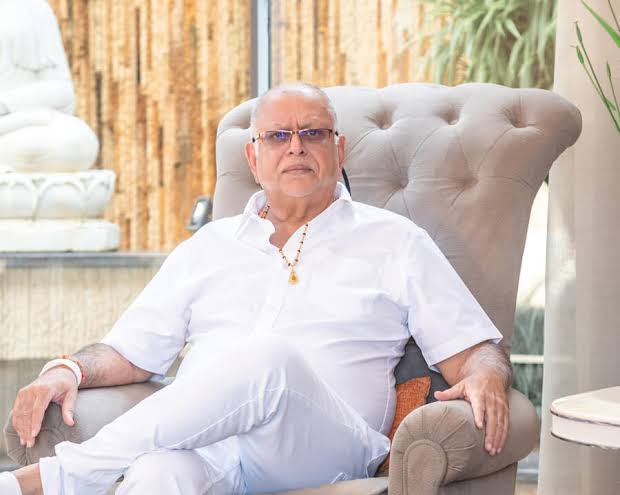
I commend Hon. Ibrahim Ssemujju Nganda, former Member of Parliament for Kira Municipality, for his dedication to promoting accountability in the management of public resources. Monitoring government expenditure is a vital component of good governance because it helps ensure that public officials remain answerable to citizens and use public funds responsibly.
President Yoweri Museveni has consistently emphasized that combating corruption and misuse of public resources is a shared responsibility. He has often argued that when citizens fail to challenge wrongdoing, the consequences ultimately affect society as a whole.
However, a closer review of Hon. Ssemujju’s recent television presentation concerning government tenancy agreements involving properties owned by businessman Dr. Sudhir Ruparelia raises important considerations. Throughout his presentation, he did not demonstrate that government leasing property from a private investor is unlawful. Neither did he reference any provision within the Public Procurement and Disposal of Public Assets (PPDA) Act that prohibits an individual or company from entering into multiple lease agreements with government institutions.
Instead, much of the discussion appeared to focus on arguments that could create the impression that private investors who transact with government are engaging in questionable conduct. Such a perception may be misleading, considering the important role investors play in economic development through employment creation, tax contributions, and infrastructure investment.
Dr. Sudhir Ruparelia is among Uganda’s most prominent indigenous investors. His business journey began after returning to Uganda with savings accumulated while working in the United Kingdom. Over the years, he invested extensively in sectors including real estate, education, hospitality, and agriculture, developing facilities that serve both private enterprises and public institutions.
Across the world, governments routinely lease premises from private property owners whenever public infrastructure is inadequate to meet operational needs. Uganda follows a similar approach. The use of privately owned buildings has enabled government agencies to continue delivering services while public facilities are being constructed, upgraded, or expanded.
At the same time, government has continued investing in its own infrastructure, including projects such as the Uganda Police Headquarters and various facilities under the Justice, Law and Order Sector. Until sufficient government-owned space is available, leasing suitable private premises remains a practical and widely accepted solution.
It is also important to recognize that government tenancy arrangements are not limited to properties owned by Dr. Sudhir Ruparelia. Over the years, numerous private property owners and institutions, including cultural entities such as the Buganda Kingdom, have leased premises to government agencies. These arrangements are generally considered legitimate provided they comply with procurement laws and regulations.
The central issue, therefore, should not be the number of properties owned by a particular investor that are rented by government. Rather, attention should focus on whether procurement processes were conducted fairly, transparently, competitively, and in accordance with the PPDA Act. Where evidence of wrongdoing exists, it should be thoroughly investigated. Where no illegality is established, public discourse should avoid unfairly targeting investors who make substantial contributions to the economy.
Beyond his business activities, Dr. Sudhir has also supported numerous charitable initiatives through the Ruparelia Foundation. These efforts include community development programs, support for cultural institutions, educational initiatives, and healthcare outreach activities aimed at improving the lives of ordinary Ugandans.
As citizens, journalists, and public leaders, it remains important to continue demanding accountability and transparency in public affairs. At the same time, it is equally important to acknowledge the role responsible investors play in driving economic growth and national development. Public criticism should be grounded in facts, evidence, and the law rather than narratives that may discourage investment.
While Hon. Ssemujju’s concerns may be motivated by a desire for accountability, discussions surrounding government contracts should remain focused on compliance with procurement regulations and proper procedures. Uganda’s continued progress depends on striking the right balance between robust oversight and a supportive environment for investment.