


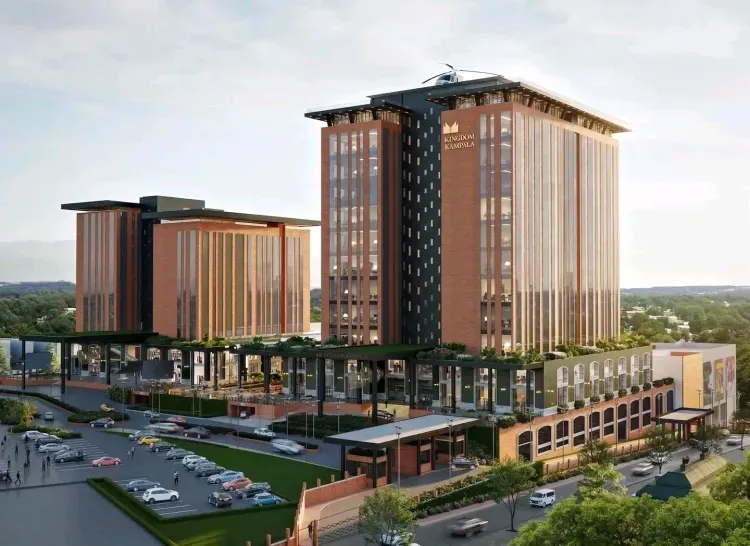
Kingdom Kampala Phase Two is poised to expand one of Kampala’s notable commercial developments with the construction of a 21-storey mixed-use tower, as demand for modern office, residential and hospitality facilities continues to influence the city’s property sector.
The project, being developed by businessman Dr. Sudhir Ruparelia through the Ruparelia Group, is expected to add a new dimension to the existing Kingdom Kampala complex. The planned development will combine premium office space, hotel accommodation, serviced apartments, retail facilities and leisure amenities within a single integrated destination.
The project comes amid a broader change in Kampala’s urban landscape. Across the city, high-rise buildings and mixed-use developments are becoming increasingly common as developers respond to population growth, rising commercial activity and growing demand for modern facilities.
Rather than separating workplaces, accommodation, shopping and entertainment across different parts of the city, Kingdom Kampala Phase Two is designed around the concept of bringing several services together in one location. This approach has become increasingly popular in major cities as businesses and consumers look for greater convenience and easier access to essential services.
For companies operating in Kampala, an integrated development can offer significant advantages. Offices located close to hotels, restaurants, conference facilities and retail outlets can make it easier for employees, clients and visiting executives to conduct business without having to travel extensively across the city.
The development is also emerging at a time when Uganda is seeking to attract greater investment in sectors such as tourism, technology, manufacturing and financial services. As the economy develops, access to high-quality commercial infrastructure is becoming an increasingly important consideration for local and international businesses.
Modern offices, executive accommodation, conference facilities and supporting services are among the facilities needed to accommodate companies expanding into Uganda. Kingdom Kampala Phase Two is expected to contribute to this infrastructure through its combination of commercial, residential and hospitality facilities.
Among the planned features is a rooftop helipad, which could provide an alternative access point for executives and other prominent visitors. The feature is particularly notable in a city where traffic congestion remains a major challenge along many routes leading into the central business area.
The project is also expected to incorporate rooftop gardens, terraces and pedestrian-friendly spaces. These features reflect a growing emphasis on creating developments that offer more than buildings alone, with attention also given to how residents, workers and visitors interact with their surroundings.
Mixed-use developments can keep commercial areas active beyond normal working hours because offices, residences, restaurants, shops and leisure facilities operate at different times of the day. For a rapidly growing city such as Kampala, this type of development could help make more efficient use of limited urban land.
However, the success of large developments also depends on the infrastructure surrounding them. Roads, public transportation, drainage, utilities and pedestrian facilities must be able to accommodate increased activity. As Kampala continues to grow, coordinating private development with improvements in public infrastructure will remain important.
Kingdom Kampala Phase Two could also add capacity to Uganda’s business tourism and hospitality sectors. Kampala is the country’s main centre for corporate activity, diplomacy, conferences and regional business engagements, creating continued demand for quality accommodation and meeting facilities.
Uganda is competing for business and conference tourism with other East African destinations, including Nairobi and Kigali, which have invested heavily in hotels, convention facilities and supporting infrastructure. Increasing Kampala’s supply of high-end facilities could therefore strengthen the city’s ability to host major regional and international gatherings.
The development is expected to generate economic activity at different stages. During construction, a project of this scale can create opportunities for workers and businesses involved in engineering, architecture, transportation, manufacturing, construction materials and related services.
Once operational, the complex could support employment across hospitality, retail, property management, security, maintenance, administration and other professional services. Companies operating from the development may also generate additional business for suppliers and service providers within Kampala.
The expansion further strengthens the Ruparelia Group’s involvement in Uganda’s property and hospitality industries. The group has invested in a range of developments across the country, with Kingdom Kampala standing among its most visible projects in the capital.
The existing Kingdom Kampala complex has become an established commercial destination in the central business district. The second phase represents another significant investment in an area where demand for premium commercial space continues to grow and available land is becoming increasingly limited.
The planned tower also reflects the broader transformation of Kampala’s skyline. High-rise offices, hotels, residential buildings and integrated commercial developments are gradually changing the character of the city, particularly around the central business district and other major commercial areas.
For property developers, continued investment in large-scale projects suggests confidence in the long-term demand for quality commercial and residential facilities. At the same time, the growing number of major developments highlights the need for Kampala to improve the infrastructure required to support a denser and more active urban environment.
When completed, Kingdom Kampala Phase Two will become another prominent feature of the capital’s skyline. Its broader significance, however, will depend on how effectively it meets the needs of businesses, residents, visitors and the surrounding community.
The project ultimately forms part of Kampala’s wider urban transformation as the city seeks to accommodate a growing population and expanding economy. Its success will be measured not only by the scale of the tower, but also by its ability to provide useful commercial infrastructure, create employment and contribute to the development of a more modern and integrated capital city.