


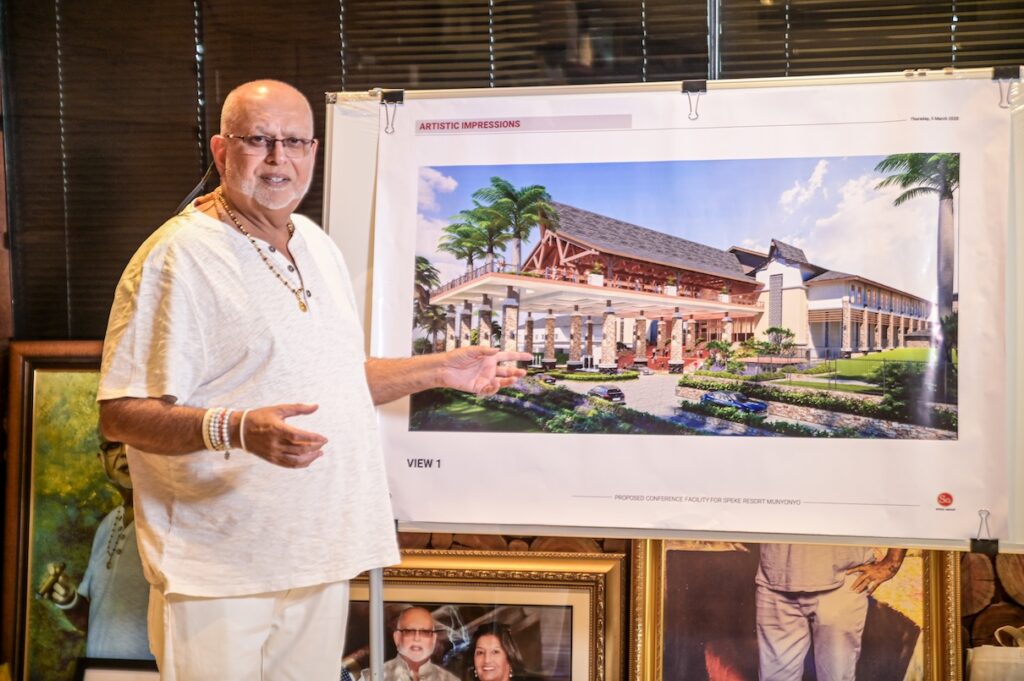
For over 30 years, businessman Sudhir Ruparelia has steadily developed a diverse business empire with interests in some of Uganda’s key economic sectors, including hospitality, real estate, education, insurance, agriculture and media.
Following his return to Uganda, Ruparelia ventured into business and gradually expanded his investments. Those efforts eventually developed into the Ruparelia Group, a diversified conglomerate whose companies and properties have become increasingly visible within Kampala and Uganda’s broader private sector.
Much of Ruparelia’s business strategy has centred on long-term investments in enterprises that provide services to individuals, businesses and institutions. His portfolio today includes hotels and resorts, educational institutions, a university, insurance, commercial property, flower production, recruitment and broadcasting.
The breadth of these investments has established him as one of the most recognisable figures in Uganda’s business community.
His career, however, has also experienced significant challenges. A major turning point came in 2016 when the Bank of Uganda took control of Crane Bank, a financial institution established by the Ruparelia Group. At the time, the regulator raised concerns about the bank’s financial condition and management.
The takeover subsequently resulted in a prolonged legal dispute involving Ruparelia and the regulator. In 2022, the Supreme Court ruled in Ruparelia’s favour in a case connected to the Crane Bank takeover, marking an important development in the long-running dispute.
Although Crane Bank was later transferred to and sold to dfcu Bank, Ruparelia’s other investments continued operating across various sectors.
Today, the group has a particularly strong presence in Kampala, where its hotels, schools, commercial developments and other enterprises form part of the city’s economic activity.
Hospitality remains one of the most prominent areas of the Ruparelia Group’s operations.
Through the Speke Group of Hotels, the business has interests in properties such as Speke Resort Munyonyo, Speke Hotel, Kabira Country Club, Forest Cottages and Dolphin Suites in Bugolobi.
The properties cater to a variety of customers, including tourists, corporate clients, conference participants, business travellers and local guests.
Speke Resort Munyonyo has become particularly prominent as a major conference and hospitality destination. Over the years, it has hosted government functions, corporate gatherings, diplomatic engagements and international meetings.
These investments have also given the group a significant position within Uganda’s tourism industry, which continues to contribute to employment and foreign exchange earnings.
Real estate and property management form another major component of Ruparelia’s business interests.
Crane Management Services, which was established in 1996, provides property management and associated services for residential, commercial and industrial properties.
Its activities include leasing, property marketing and consultancy, with operations covering Kampala and other parts of Uganda.
The company operates within a property sector that has expanded alongside Kampala’s population and economic activity, creating increased demand for offices, retail space, residential units and mixed-use developments.
The group has also invested in major commercial projects, including Kingdom Kampala, which has become a notable mixed-use development in the capital.
Education is another area where the Ruparelia Group has established a substantial presence.
Kampala Parents School, acquired by the group in 2004, is one of the recognised private primary schools in Uganda. It follows Uganda’s national curriculum and serves pupils from Kampala and surrounding communities.
The group’s education portfolio also includes Kampala International School Uganda, which provides an international curriculum from the early years through secondary level. Its international approach has attracted both Ugandan and expatriate families looking for an alternative educational pathway.
At university level, the group acquired Victoria University in 2013. The institution offers programmes across disciplines including business, law, health sciences and technology.
The investment reflects the expanding contribution of private universities to Uganda’s higher education system, where institutions compete to provide specialised academic programmes and attract students from Uganda and other countries within the region.
Ruparelia’s investments also extend beyond Kampala’s urban economy into agriculture.
Premier Roses, located in Entebbe, forms part of the group’s agricultural interests and produces roses for export.
Uganda’s flower industry has developed into an important non-traditional export sector, creating jobs and earning foreign currency through access to international markets.
Premier Roses employs greenhouse and hydroponic production methods to cultivate different varieties of flowers for overseas customers.
The investment demonstrates the group’s interest in businesses capable of connecting Ugandan production with international markets rather than depending exclusively on domestic demand.
The group is also active in insurance through Goldstar Insurance.
The company offers general insurance products covering areas such as motor vehicles, property, industrial risks and various personal and commercial requirements.
Insurance plays an important role in the economy by helping individuals and businesses protect themselves against financial risks while contributing to the wider financial system.
The Ruparelia Group’s experience in financial services is also linked to its earlier ownership of Crane Bank, whose closure and subsequent legal proceedings became one of Uganda’s most closely followed banking disputes in recent years.
Employment services form another part of the group’s operations through Premier Recruitment.
The company helps connect employers with job seekers in Uganda and international markets, recruiting workers for industries such as hospitality, construction, security, oil and gas and marketing.
With Uganda’s youthful population and expanding labour market, recruitment companies can play an important role in linking businesses seeking particular skills with people looking for employment.
The recruitment business also creates a connection between Ugandan workers and employers operating across different sectors and markets.
The group’s interests extend into broadcasting through Sanyu FM.
The radio station is an established private broadcaster in Uganda and has maintained its position within Kampala’s competitive media industry through music, entertainment and talk-based programming.
Through the station, the group participates in Uganda’s media and consumer economy while reaching audiences across the country.
Construction and engineering are represented within the group through VCON Construction Uganda.
The company undertakes construction and civil engineering projects, providing another connection between the group’s property investments and the wider construction industry.
Its activities generate demand for engineers, contractors, suppliers, building materials and construction workers, linking the group’s developments to a broader network of businesses and professionals.
The importance of the Ruparelia Group therefore extends beyond simply counting the number of businesses it owns.
Each company operates within a wider economic network.
Hotels require employees, food suppliers, transport providers and other service businesses. Schools employ teachers and support workers while purchasing educational materials and other supplies. Flower farms connect local production with overseas markets, while property developments generate opportunities for contractors, engineers, suppliers and professional service providers.
Together, these relationships create an economic footprint that extends well beyond the group’s individual companies.
Ruparelia’s career also provides an example of the growing role of indigenous capital in Uganda’s private sector. Large locally owned businesses can channel substantial investment into industries that require significant financial resources and long-term planning.
At the same time, the group’s experience illustrates the challenges associated with operating large private enterprises, particularly in highly regulated industries such as banking and insurance.
The Ruparelia story is therefore about more than the accumulation of personal wealth. It also reflects the development of Uganda’s private sector, Kampala’s rapid expansion and the growing role of domestic investors in areas such as tourism, education, property, agriculture and financial services.
From hotels and educational institutions to commercial property and flower exports, the group’s businesses have become part of Uganda’s economic landscape.
Looking ahead, the group’s continued growth will depend on its ability to strengthen existing investments while responding to changing customer needs, technological developments, regulatory requirements and competition in Uganda and the wider East African market.