


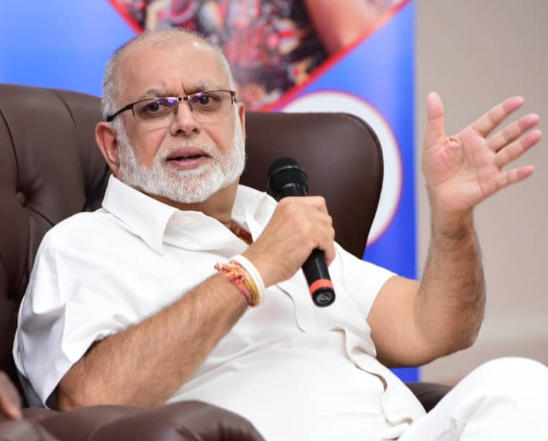
Dr. Sudhir Ruparelia’s entrepreneurial journey offers an example of how locally owned businesses can contribute to Africa’s broader economic development. After returning to Uganda following years away from the country, he gradually built a diversified business group whose companies now operate across several sectors and provide employment and services to thousands of people.
However, Ruparelia’s vision extends beyond the Ugandan market. He has advocated for deeper African integration, including greater freedom of movement through a common African passport and, ultimately, the adoption of a single continental currency. His argument is that Africa’s economic potential remains constrained when people and businesses are separated by borders, different currencies, immigration rules and varying regulatory systems.
This perspective places his business philosophy within the wider Pan-African debate.
A Bigger African Market
For Ruparelia, African integration is not simply a political concept. It also has significant economic implications.
Africa is home to more than a billion people and represents one of the world’s largest potential consumer markets. Yet companies expanding across the continent frequently have to deal with different currencies, tax systems, regulations, immigration requirements and trade procedures.
Reducing these barriers could make it easier for African companies to expand beyond their domestic markets, attract investment and compete more effectively with multinational corporations.
Ruparelia’s own business journey demonstrates the potential of African-owned enterprises when they are able to accumulate capital and expand over time.
He returned to Uganda in 1985 with approximately $25,000 after spending his teenage years in the United Kingdom following the expulsion of Asians from Uganda in 1972. From those relatively modest beginnings, he developed a diversified business portfolio covering areas such as real estate, hospitality, education, agriculture and insurance.
The Importance of Indigenous Capital
The significance of such businesses goes beyond the wealth accumulated by an individual entrepreneur.
Across Africa, large parts of the corporate landscape have historically been dominated by international companies. The growth of substantial African-owned business groups therefore has implications for economic independence and local wealth creation.
Companies owned by African entrepreneurs can keep investment capital within local economies while creating jobs, developing infrastructure and generating opportunities for suppliers, contractors and smaller enterprises.
Ruparelia’s investments in education and hospitality illustrate this broader role.
Institutions associated with his business interests include Kampala Parents’ School, Kampala International School Uganda and Victoria University. His hospitality investments, including Speke Resort Munyonyo, have also provided venues capable of hosting major international conferences and gatherings.
Such investments demonstrate how private African capital can contribute to sectors that have wider economic and social importance.
His Vision for a More Connected Africa
The idea of a borderless Africa is increasingly part of the continent’s economic conversation.
The African Continental Free Trade Area is designed to promote a larger market for African goods and services, while regional organisations such as the East African Community continue working towards deeper economic integration.
The EAC has also maintained its plans for monetary integration, including the long-term objective of establishing a single East African currency.
Against this background, Ruparelia’s support for easier movement across African borders and a common currency reflects a broader aspiration to reduce the barriers that limit intra-African trade and investment.
A common passport, for example, could make it easier for Africans to travel, work, study and conduct business across the continent. A shared currency could potentially simplify transactions and reduce some of the costs associated with exchanging multiple currencies, although achieving such a system would require substantial economic and political coordination.
A Personal Connection to African Integration
Ruparelia’s own history gives his views on integration a particularly personal dimension.
His family experienced displacement from Uganda when he was young, yet he eventually returned to the country and invested his capital and experience in its economy.
That journey highlights the potential contribution of Africans in the diaspora when they are able to return with financial resources, knowledge, skills and international connections.
His experience can therefore be viewed as an example of how African talent and capital can contribute to development when barriers between countries and communities are reduced.
From Ugandan Success to a Continental Vision
Ruparelia’s story is not simply about building a successful business in one country. It also raises questions about what African entrepreneurs could achieve if they had access to a genuinely integrated continental market.
A company that succeeds in Uganda could potentially expand into Kenya, Tanzania, Rwanda, Nigeria, Ghana or other African markets without facing excessive administrative and financial barriers.
Such integration could create larger markets for African-owned businesses while encouraging investment, innovation and competition.
There are, however, significant challenges. Creating a truly borderless Africa would require governments to coordinate immigration policies, trade regulations, taxation, monetary policy and other institutions. A single currency, in particular, would require countries to achieve substantial levels of economic and financial convergence.
The process would therefore be complex and could take many years.
A Pan-African Business Philosophy
Even with those challenges, the underlying idea remains significant.
Africa’s economic future depends not only on attracting foreign investment but also on developing businesses owned and controlled by Africans themselves. Strong indigenous companies can create jobs, develop local expertise, invest in infrastructure and demonstrate that African capital can generate businesses capable of operating at significant scale.
Ruparelia’s decades in business provide one example of that potential.
His call for greater African integration takes that experience a step further. Having built businesses within Uganda, his vision is for an economic environment where African entrepreneurs are able to think and operate beyond individual national borders.
Ultimately, his message reflects a central principle of Pan-Africanism: Africa’s economic strength can increase when its people, markets and businesses become more closely connected.
For Ruparelia, the goal is therefore not simply to build successful companies in Uganda, but to imagine a continent where African entrepreneurs, investment and capital can move more freely and participate in a much larger African economy.