





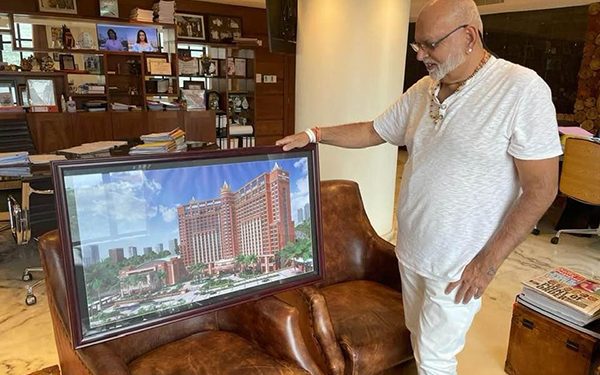
In Uganda’s corporate landscape, where many executives compete for media attention and dominate online conversations, one of the nation’s wealthiest businessmen has chosen a markedly different approach. Sudhir Ruparelia keeps a low public profile.
He does not maintain any verified social media presence and has openly distanced himself from impersonators using his name. Interviews are rare. Political debates seldom draw his commentary. When major controversy arises most notably during the 2016 Crane Bank takeover he avoids public spectacles, choosing instead to respond through legal channels and financial records rather than press briefings.
Yet even with this quiet stance, his influence has continued to expand.
An Empire That Communicates Through Results
Ruparelia’s presence in Kampala is unmistakable. From upscale hotels and commercial towers to shopping centers and residential complexes, his developments shape much of the capital’s skyline. Beyond property, his investments span hospitality, education, insurance, agribusiness, and manufacturing. His impact is deeply embedded in Uganda’s economy, even though he himself remains largely out of the spotlight.
This contrast appears intentional. In an environment where a single public remark can attract scrutiny or backlash, discretion has become a strategic strength.
As one Kampala-based analyst put it, Ruparelia does not seek to win debates in the public arena; he prevails through ownership, agreements, and patience.
When Discretion Became Defense
The Crane Bank saga put this philosophy to the test. When regulators took over the bank once a flagship of his financial portfolio many expected a vocal and highly publicized battle. Instead, Ruparelia maintained public silence, directing his response through the courts while quietly restructuring and strengthening other segments of his business empire.
Years later, while legal and political discussions around the episode persist, the broader Ruparelia Group has not only endured but grown. New hospitality ventures have launched. The real estate portfolio has expanded. Educational institutions under his umbrella have increased enrollment. Operations continued steadily despite the surrounding noise.
In a country where the dynamics between business and government can shift quickly, such caution has proven to be more than temperament it has functioned as protection.
The Private Side of a Public Mystery
Those who interact with Ruparelia behind closed doors often describe someone different from the reserved image perceived by the public. Associates and insiders portray him as approachable, generous, and attentive an individual who listens carefully, makes calculated decisions, and maintains strong relationships with key stakeholders.
He participates in rooms where important decisions are shaped, though rarely in front of cameras.
This selective visibility means his public persona remains understated, while his private influence network stays active and far-reaching. He is not absent; he is deliberate about where and how he engages.
Reputation Without Noise
Over time, this approach has shaped a distinctive brand. To tenants and partners, he represents reliability. To regulators, caution. To competitors, unpredictability. To the broader public, he remains somewhat enigmatic.
Unlike more outspoken magnates whose personal views intertwine with their corporate brands, Ruparelia has kept a clear boundary between himself and his enterprises. His companies speak through completed projects, steady operations, and sustained employment not through trending posts or televised debates.
Controversies struggle to gain traction when there is little public commentary to fuel them.
A Different Model of Influence
For young entrepreneurs who often equate online presence with achievement, the Ruparelia example offers a powerful contrast. Visibility and authority are not the same. In an age dominated by digital noise, restraint can be a strength. Allowing performance and long-term results to define one’s reputation may carry greater weight than constant commentary.
As Uganda’s business climate becomes more competitive and politically sensitive, the billionaire who rarely addresses the public continues to develop, invest, and expand. In many ways, his quiet consistency has become his most powerful statement.


