


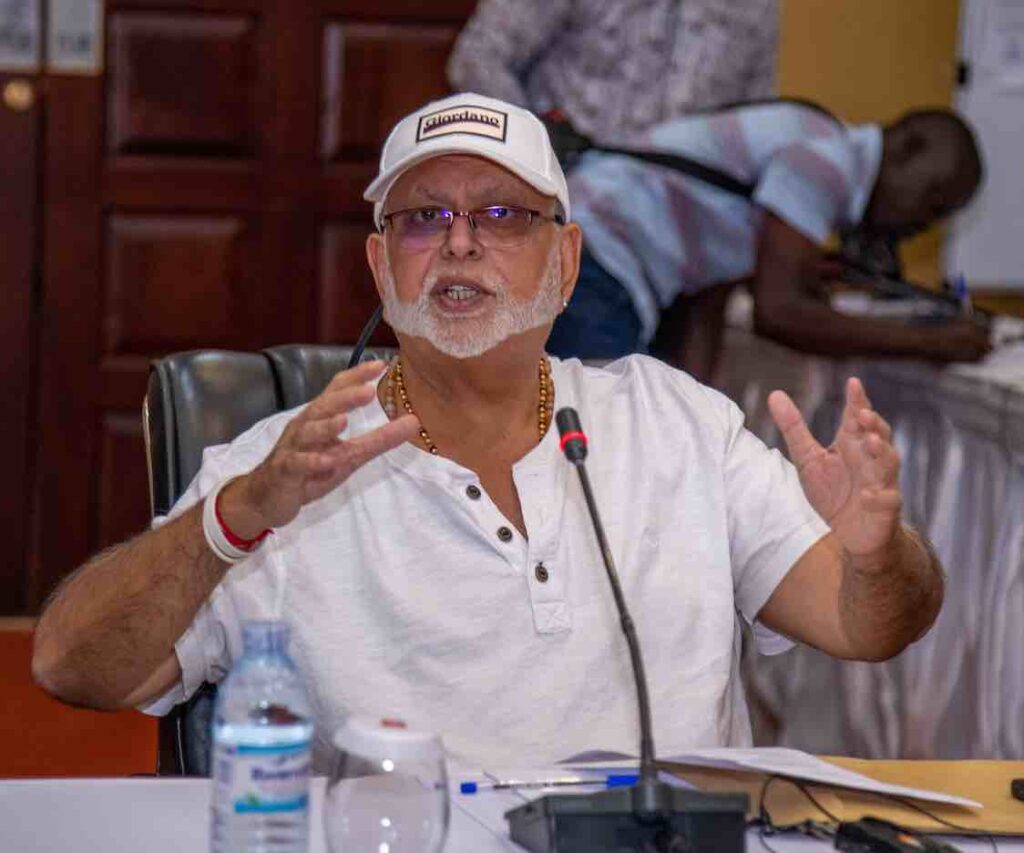
Businessman Dr Sudhir Ruparelia has described the long-running legal dispute over the collapse and sale of Crane Bank as a battle that goes beyond financial compensation, saying it raises wider questions about justice, corporate integrity and the treatment of indigenous investors.
The dispute has now entered a critical phase before the High Court in London, where former Crane Bank shareholders led by Sudhir are seeking about £200 million in damages, equivalent to roughly Shs1 trillion, over events surrounding the bank’s takeover and the subsequent transfer of selected assets and liabilities to dfcu Bank. The trial began in London in October 2026 and is expected to run for 12 weeks.
The case dates back to Bank of Uganda’s intervention in Crane Bank on October 20, 2016. Sudhir and the other claimants allege that a series of unlawful actions led to the bank’s downfall and the eventual transfer of parts of its business to dfcu.
According to the claimants’ case before the English court, Crane Bank had a strong balance sheet and was profitable before the intervention. They allege that Bank of Uganda and other defendants were involved in a scheme that resulted in the takeover of the bank and the subsequent transfer of its business.
Those allegations are disputed by the defendants.
dfcu’s case is that Crane Bank had been poorly managed, was significantly undercapitalised and was facing liquidity challenges that justified intervention by the central bank. Court records also show that dfcu relies on forensic work conducted by PricewaterhouseCoopers concerning the bank’s financial position and alleged irregularities.
The London court is therefore being asked to determine much more than the value of Crane Bank. Key questions include the bank’s financial condition at the time of the intervention, whether it was undercapitalised or mismanaged, and whether the actions taken by the defendants were lawful and justified.
Among the issues identified by the court are Crane Bank’s financial position in 2015 and 2016, the value of its assets and liabilities, its capital and liquidity position, alleged management issues and the circumstances surrounding the January 2017 transaction with dfcu.
For Sudhir, the dispute has also become a matter of principle and legacy.
“This fight is bigger than money. It is about principle, truth, and protecting the reputation we built over decades,” Sudhir said, according to comments reported on the dispute.
He has argued that the treatment of Crane Bank could have wider consequences for confidence among Ugandan and other East African investors, particularly if successful indigenous businesses can be subjected to what he considers arbitrary institutional action.
The claimants maintain that the London proceedings offer an opportunity to establish whether the actions surrounding Crane Bank were properly carried out and whether its former shareholders are entitled to compensation.
The dispute began on October 20, 2016, when Bank of Uganda placed Crane Bank under statutory management. At the time, the central bank said the lender was significantly undercapitalised, posed a risk to financial stability and that allowing it to continue operating in its existing form was detrimental to depositors.
On January 24, 2017, Crane Bank was placed into receivership. The following day, Bank of Uganda, acting as receiver, entered into an agreement to transfer most of the bank’s assets and liabilities to dfcu Bank.
The transaction subsequently triggered years of litigation in Uganda and later in the United Kingdom.
The London proceedings involve Crane Bank and several former shareholders, including Sudhir Ruparelia, against dfcu and other defendants. The case has involved extensive pre-trial disputes over disclosure, evidence and the competing accounts of what happened to the bank.
In March 2026, the English High Court dealt with a disclosure application concerning documents relevant to Crane Bank’s financial position, loan book and the circumstances surrounding the transaction.
The London proceedings are also connected to a wider history of litigation in Uganda.
In 2019, Uganda’s Commercial Court dismissed a case brought against Sudhir and Meera Investments over alleged financial losses at Crane Bank, finding that Crane Bank, while under receivership, lacked the capacity to bring the proceedings.
The matter later reached the Supreme Court. In February 2022, the Supreme Court dismissed Crane Bank’s appeal after the appeal had been withdrawn, leaving the lower court decisions standing, including findings relating to the end of the bank’s receivership and its legal status.
Those proceedings are separate from the claims currently being determined by the English Commercial Court.
The London case concerns the claimants’ allegations against dfcu and the other defendants under English proceedings, while the defendants have presented their own case regarding Crane Bank’s financial position, management and the circumstances that led to Bank of Uganda’s intervention.
The outcome of the London trial could therefore have significance beyond the former owners of Crane Bank.
For Sudhir and the other claimants, the proceedings provide an opportunity to challenge what they regard as an unjust intervention and seek compensation for losses they attribute to the events surrounding the bank.
For the defendants, the trial provides an opportunity to defend the legality and rationale of the decisions taken during Crane Bank’s collapse and the subsequent transfer of its assets and liabilities.
The case could ultimately influence how investors, regulators and financial institutions view issues such as corporate intervention, bank resolution and investor protection in Uganda and the wider East African region.
However, the competing positions remain matters for the English High Court to determine. dfcu has consistently disputed the claimants’ case and has maintained that the proceedings lack merit. The court has not made a final determination on the substantive allegations.
At the heart of the dispute is a fundamental question: was Crane Bank a financially distressed institution that required regulatory intervention, or was a viable indigenous bank improperly dismantled and transferred?
That question now lies at the centre of one of Uganda’s most closely watched international commercial disputes.