


JINJA — Civil society organisations and child-rights advocates are calling on the Ugandan government to increase funding for the prevention and response to sexual violence against children, warning that laws and policies will have little impact if they are not supported by adequate financial resources.
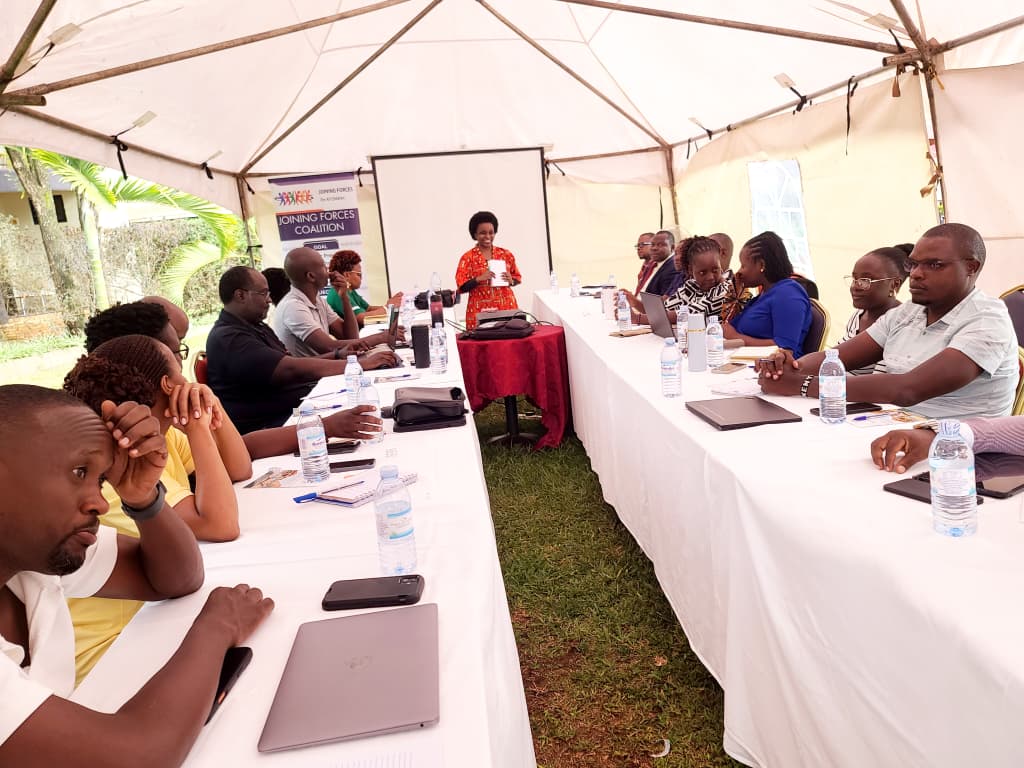
The call was made during a three-day retreat in Jinja organised by World Vision Uganda in partnership with the Joining Forces Coalition. The meeting brought together more than 30 stakeholders to discuss strategies for ensuring that sexual violence against children (SVAC) receives greater attention in Uganda’s 2027/28 national budget.
Participants included representatives from the Uganda Child Rights NGO Network (UCRNN), the Busoga and Buganda cultural institutions, government agencies, civil society organisations, the Inter-Religious Council, economists, the Civil Society Budget Advocacy Group (CSBAG) and Makerere University, among others.
The discussions centred on the need to move beyond policies and commitments and focus on implementation, financing and measurable interventions to address sexual violence against children.
Calls for stronger government investment
Opening the retreat, Irene Kagoya, Associate Director for Advocacy at World Vision Uganda, said sexual violence against children remains a serious concern both globally and in Uganda despite ongoing efforts to combat it.
She acknowledged that available statistics suggest a decline in reported cases but stressed that the situation still requires sustained investment and intervention.
Kagoya said government has a responsibility to establish systems and policies that protect children, but implementation continues to present significant challenges.
She pointed to previous research and assessments showing a gap between government commitments and actual implementation, saying stakeholders should use available evidence to advocate for increased public investment.
“How do we shift from policy to implementation, strategies, funding allocation and also strengthen commitments?” Kagoya asked.
She said the 2027/28 budgeting process offers an important opportunity for child-rights organisations and other stakeholders to influence government priorities and push for resources dedicated to preventing and responding to SVAC.
Cultural leaders call for greater involvement
Dr Joyce Abaliwano, Minister for Gender and Children Affairs in the Busoga Kingdom, urged greater involvement of cultural institutions in efforts to combat violence against children, citing their influence within local communities.
She warned development partners against developing interventions without first understanding the cultural and social circumstances affecting the communities they intend to support.
“We need to know what is happening in the real world and have a balance between the numbers and what exactly is on the ground,” she said.
Abaliwano said churches and cultural institutions can play an important role because of their influence, but also called for stronger cooperation with security agencies, including the police and Uganda People’s Defence Forces.
She referred to an alleged case in Buyende District in which a girl was reportedly defiled by three men in uniform and later encountered difficulties in pursuing justice.
According to Abaliwano, the girl’s family alleged that evidence gathered during the case had been manipulated to shield the suspects. She said she became involved in supporting the girl, including helping her return to school, but the child continued to suffer psychological distress.
She said the case demonstrates the importance of stronger accountability and coordination between institutions responsible for protecting children.
Teenage pregnancy remains a concern in Busoga
Abaliwano also highlighted teenage pregnancy as an ongoing challenge in the Busoga sub-region, noting that it can contribute to wider problems such as gender-based violence, defilement and disruption of children’s education.
She attributed some of the challenges to weaknesses in parenting and called for greater investment in family-centred interventions.
The Busoga Kingdom, she said, has been promoting programmes designed to encourage responsible parenting and positive family values. Among them is “Omusadha N’empangho,” which focuses on responsible fatherhood and leadership within families.
She further expressed concern about the increasing influence of social media on children and called for stronger measures to address risks associated with online platforms.
The minister also urged the media to take a more active role in educating communities, while challenging stakeholders to find ways of addressing harmful online content without unnecessarily restricting legitimate digital freedoms.
Government outlines its approach
Emmanuel Omene, Principal Economist in the Planning Unit at the Ministry of Gender, Labour and Social Development, said government recognises sexual violence against children as a serious national issue that requires coordinated action.
He explained that abuse can occur in different environments, including homes, schools, communities and institutions, with victims potentially suffering both physical and psychological consequences.
Omene said Uganda already has a broad legal and policy framework aimed at preventing and responding to sexual violence against children. However, he stressed that all parts of the child-protection system need to work together.
“As actors, we look at the entire system and the entire ecosystem should be engaged,” he said.
He cited statistics indicating that one in three girls and one in six boys in Uganda have experienced sexual abuse.
He also said available data shows that 44 per cent of women and 39 per cent of men aged 15–49 have experienced sexual violence since the age of 15, while 17 per cent of women and six per cent of men have experienced sexual violence at some point in their lives.
Omene noted that emerging threats, particularly the online sexual exploitation of children, require new approaches as technology creates additional avenues for perpetrators to target children.
He challenged participants to prepare a thematic issues paper containing specific recommendations and interventions that can be presented to government during the upcoming budget process.
Civil society urged to use budget process
Omene said government is preparing to share information on the 2027/28 national budget, creating an opportunity for civil society organisations and other stakeholders to submit proposals for consideration.
He explained that many child-focused interventions fall under the Human Capital Development Programme, where stakeholders can advocate for specific priorities.
He encouraged organisations to align their proposals with existing government programmes rather than creating separate systems.
The ministry, he added, has mechanisms for identifying financing gaps, including budget areas and profiles outlining its planned interventions.
Omene also proposed the creation of a technical working group comprising key stakeholders to prepare a coordinated issues paper ahead of the budget process.
Focus shifts from policy to accountability
The Jinja retreat comes amid growing calls for Uganda to move from developing policies and laws to ensuring their effective implementation and accountability.
Participants acknowledged that the country has made progress in establishing legislation, policies and institutions intended to protect children. However, the continued occurrence of sexual violence highlights persistent weaknesses in prevention, enforcement, financing, public awareness and access to justice.
Stakeholders said the next step is to turn evidence from communities and research into clear, costed proposals that government can fund and implement.
For civil society organisations, the 2027/28 national budget represents a significant opportunity to transform broad commitments on sexual violence against children into properly funded programmes with measurable results.
The stakeholders are expected to use the outcomes of the Jinja retreat to develop a roadmap for influencing government resource allocation while strengthening cooperation between civil society, government, cultural and religious institutions and the media.
Ultimately, participants said, the success of the next budget will be measured by whether it provides adequate resources to prevent sexual violence, protect children, improve response mechanisms and ensure survivors receive justice and the support they need.